Hailuo 3 vs Seedance 2 for architectural animation

Shaun McCallum
August 4, 2026Two of the strongest video models sit side by side in Fenestra's Video tool. We ran the same prompts through both to see what actually separates them.
MiniMax released Hailuo 3 on 31 July, branded MiniMax H3 on their own site, and it is now in Fenestra's Video tool alongside Seedance 2. If you animate architectural renders and interior visuals, here is which one to reach for.
The short answer: both models handle a first and last frame well when the camera move is fast enough to hide the join. Ask for a legible move between two distant frames and they split. Seedance 2 blends, inventing geometry to make the two frames reconcile. Hailuo 3 stages the scene to earn the shot instead. For architecture that decides it, because invented geometry is the one thing you cannot send to a client.
The rest, at a glance:
- Resolution. Hailuo 3 goes to 2K in Fenestra. Seedance 2 runs at 720p today.
- Audio. Both generate it in the same pass. Hailuo 3 follows a "no music" instruction more reliably.
- Length. Hailuo 3 gives you 5, 10 or 15 seconds. Seedance 2 adds 4, 8 and 12.
- Camera. Seedance 2 moves more smoothly. Hailuo 3 keeps the building more readable while it moves.
We ran the same three prompts and the same input frames through both. The prompts are deliberately ordinary, the kind you type when you are working rather than tuned paragraphs written to flatter a model. Both models would go further with more careful prompting. This is how they behave on a normal day.
Hailuo 3 vs Seedance 2 on the same three prompts
Exterior to interior whip zoom
Prompt: "0.5s super fast whip zoom in camera movement from exterior to interior, no sound effects or music. Simply city background noise"
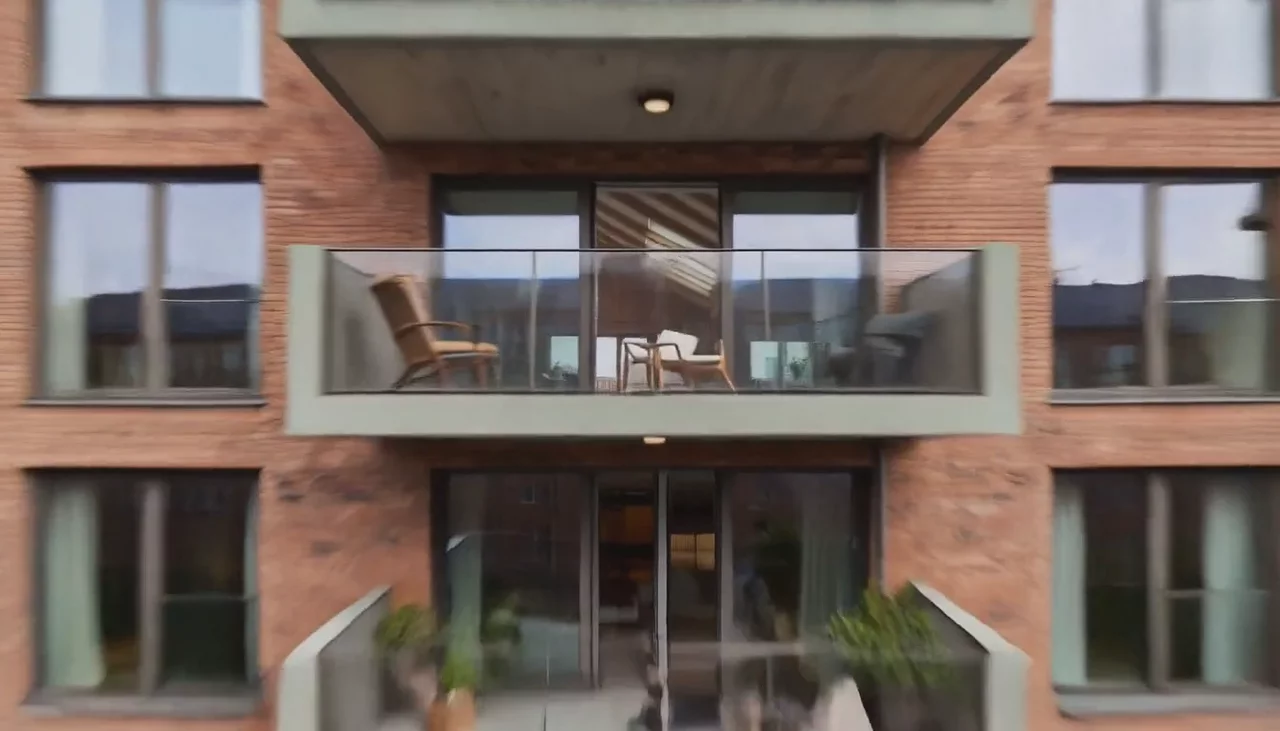
This one is a keyframe test too. The street elevation is the first frame, the loft is the last, and the model has to get from one to the other inside half a second.


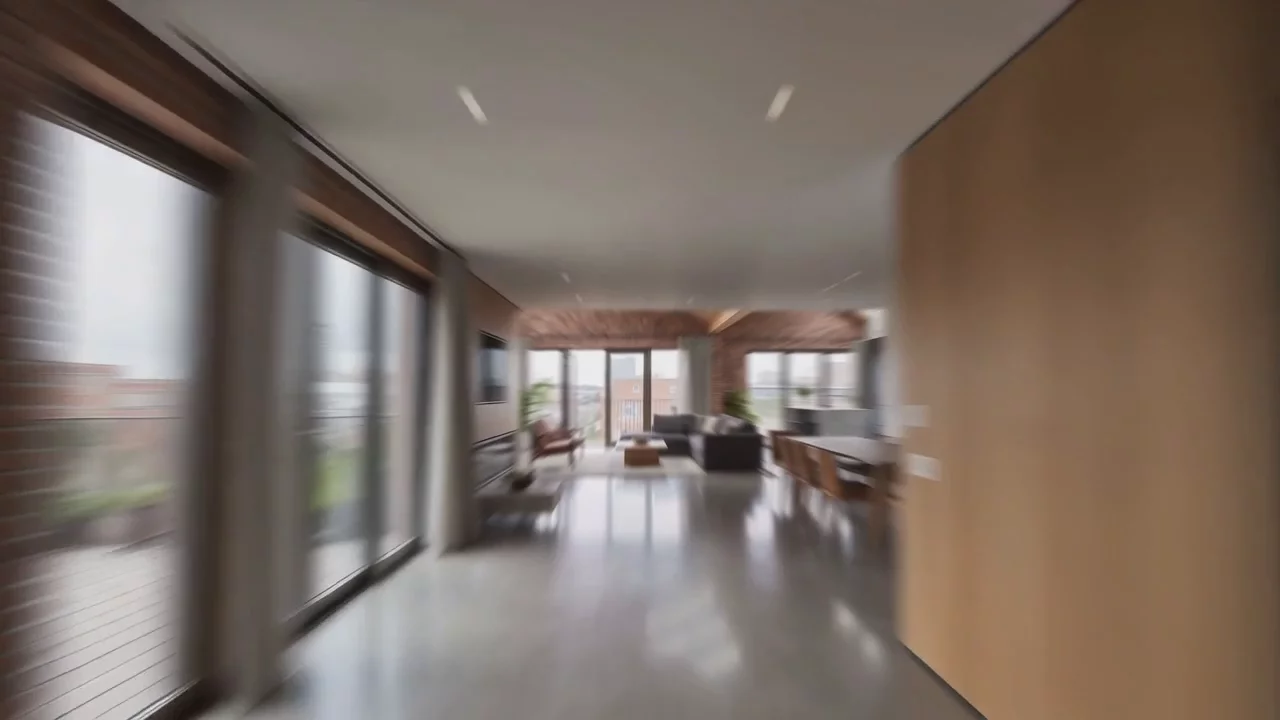
Both land it. Both smear the facade on the way through, which is the point of a whip zoom rather than a fault in it, and both arrive at the loft intact.
They differ on timing. The prompt asked for the whip inside half a second and Seedance 2 takes that literally, so a second in it is already deep into the blur. Hailuo 3 is slower to commit and holds a readable elevation for longer.
Which one is right depends on the cut. If the whip joins two shots, Seedance 2 gave you what you asked for. If it opens a presentation, Hailuo 3's extra beat of legible brick coursing and balustrade is doing real work.
Detail zoom with a timelapse
Prompt: "timelapse, subtle shadow movement, keep the camera static, no camera movement"
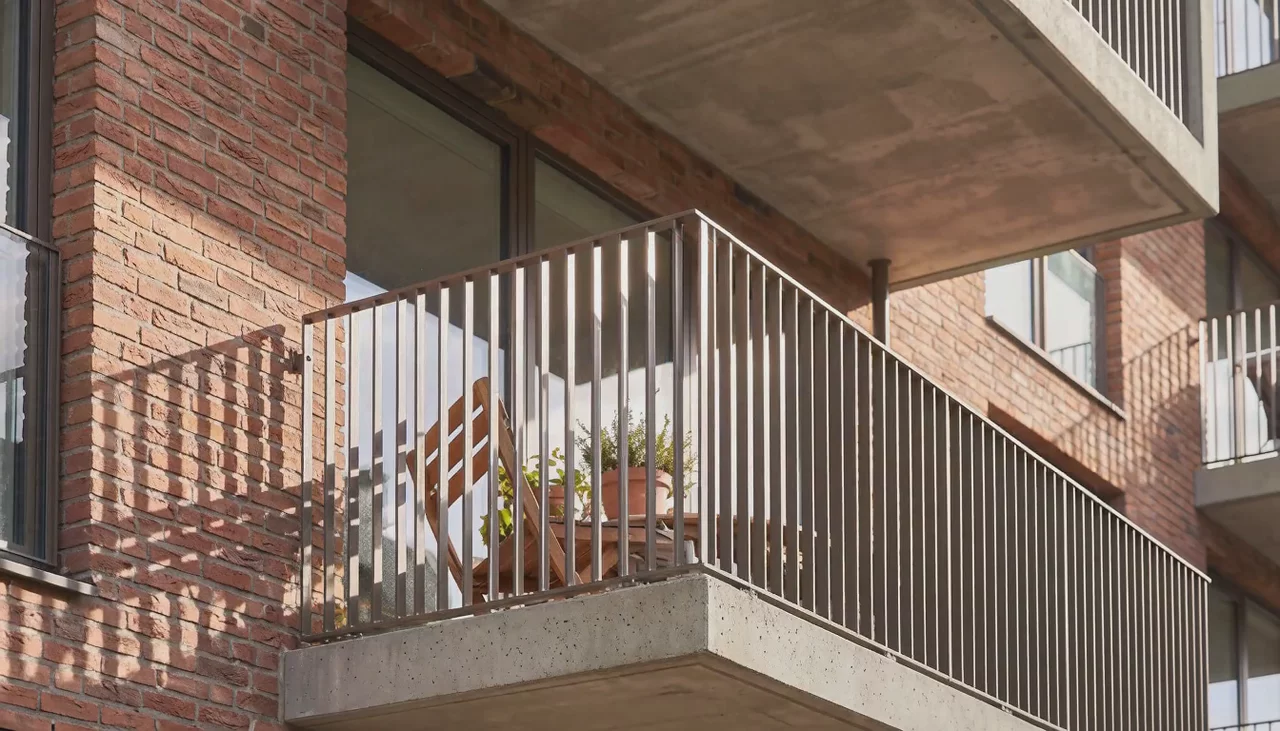
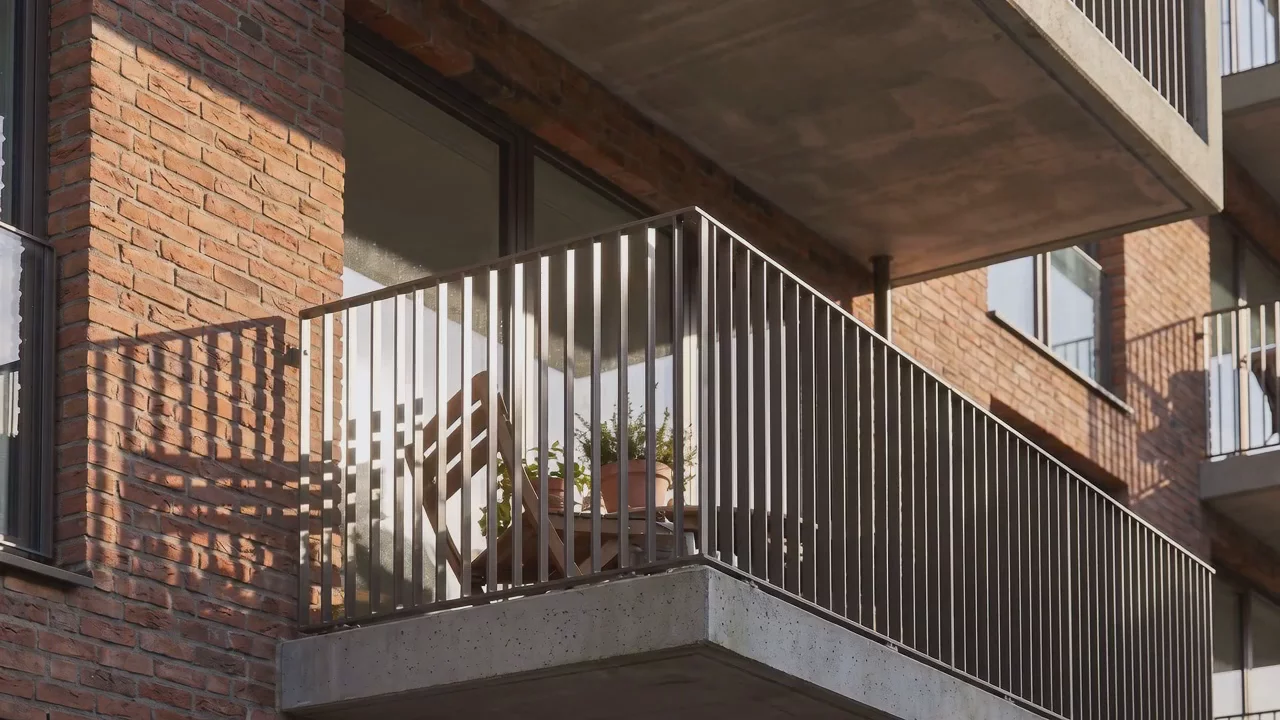
Tight on a single balcony, camera locked off, light moving through the clip. This is the hardest of the three even though it looks like the easiest. Fine repeating metalwork under changing light is where architectural animation usually breaks. Railings shimmer, balusters drift, shadows detach from what casts them, and a locked-off camera gives the model nowhere to hide any of it.
Both hold up. A static detail shot with a timelapse is the cheapest good-looking clip you can make from a still render, and it is the workflow worth stealing from this post.

First frame to last frame: wide shot to a coffee being made
This is the test that separated them.
Prompt: "whip zoom to pouring kettle into v60 coffee maker, background noise no music"
The first frame is the loft, wide. The last frame is a close crop on a pour-over coffee being made at the island. That is a long way to travel, and it is the kind of jump you ask for when you want a hero shot to land on a detail.


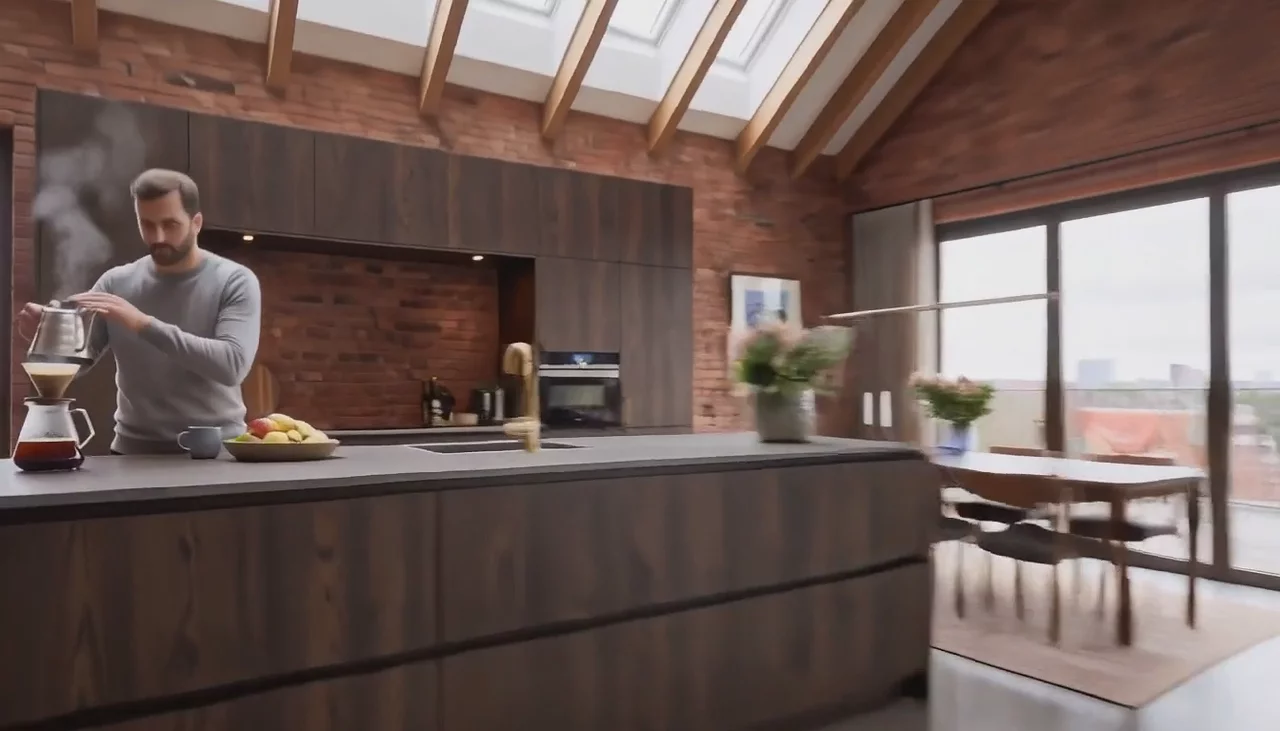
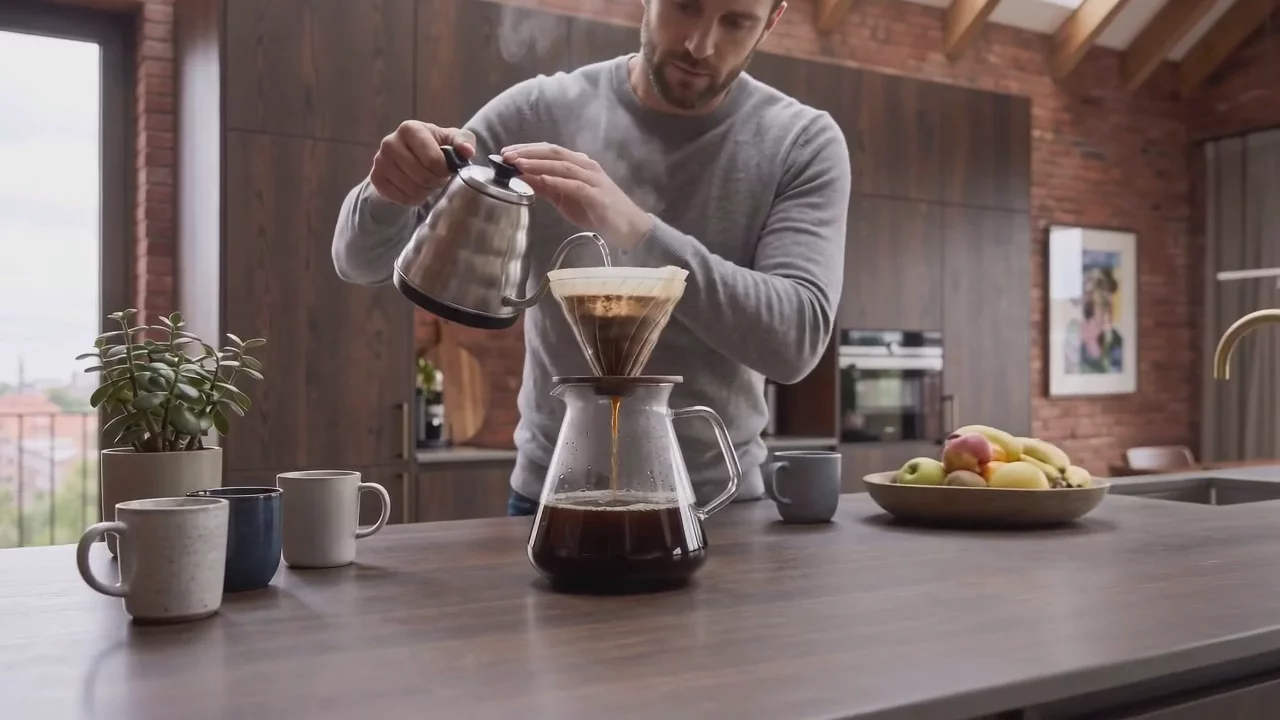
Seedance 2 solves the gap by blending. It moves smoothly, but it adds geometry along the way to reconcile the two frames, joinery and surfaces that were in neither input. The camera move is the nicer of the two. What it passes over is not your building.
Hailuo 3 solves it by staging. It moves the person into position first, then zooms in on what he is doing, rather than dissolving from one frame to the other. The camera work is rougher and you can feel it working, but the room stays the room.
For a moodfilm, Seedance 2 gives you the better-looking clip. For a scheme that exists or has been approved, invented joinery is disqualifying and Hailuo 3 is the one to run.
Which model handles first and last frame keyframes better?
Both take a first and last frame, and it is the workflow architects use most. Day to night on the same elevation. Winter to summer landscaping. An empty shell to a staged interior. The change is controlled by the two images you supply rather than by a prompt describing what you hope happens.
Two of the three tests above were keyframe pairs and they came out differently. The whip zoom travels further, street to living room, and both models landed it. The coffee shot travels less and only Hailuo 3 held together.
Distance is not what separates them. What matters is whether the move hides the join. A whip zoom is blurred by design, so invented geometry has nowhere to show. A clean move across a room leaves it in plain sight.
So give a far-apart pair a fast or blurred move to travel on. If the camera has to stay legible the whole way, that is where the models split and Hailuo 3 is the safer run.
Resolution: 2K on Hailuo 3, 720p on Seedance 2
In Fenestra, Hailuo 3 generates up to 2K, with 768P available for a faster pass. Seedance 2 runs at 720p today. The model itself goes higher and we will lift it as soon as support lands.
On a phone that gap is invisible. On a projector in a client meeting, or on a hero loop at the top of a project page, it decides how the work reads. Mullion lines, brick coursing and slim railings soften first, and they are what people look at hardest.
If you need more than 2K right now, LTX 2.3 renders at 4K and is the one for final delivery.
Both models generate their own audio
Neither needs a second pass for sound.
They take direction differently. Two of the three prompts above asked for no music, "background noise no music" and "no sound effects or music. Simply city background noise". Hailuo 3 is the better listener, so you tend to get room tone and environment back rather than a score laid under everything. If you narrate or score your clips yourself, that saves you real time.
Clip length and framing
Hailuo 3 runs at 5, 10 or 15 seconds. Seedance 2 gives you more steps: 4, 5, 8, 10, 12 or 15.
Both take the camera presets in the prompt bar, orbit, dolly in, rise up and pan, or a written description of the move if no preset matches the shot. Both follow the aspect ratio of your input image.
Which should you use for architectural animation?
Hailuo 3 for client and planning submissions, competition films, hero loops on a project page, and any keyframe pair with real distance in it. Reach for it when the building has to stay the building.
Seedance 2 for social posts, sizzle reels and moodfilms, where a smooth camera matters more than strict fidelity to the scheme. Seedance 2 Fast is the one for finding your move before you commit.
Most projects use both. Find the motion on Seedance 2 Fast, then run the final on Hailuo 3.
How to run Hailuo 3 and Seedance 2 in Fenestra
Open the Video tool, drop in your render or set your first and last frame, then pick your model from the selector in the prompt bar. It is listed as Hailuo 03, with Seedance 2 alongside it. Add a camera preset or describe the move, then hit Animate. Full detail is in the Video documentation.
Animate with Hailuo 3 →
Try It NowRelated Articles

How to Make an Architectural Walkthrough From a Single Render
Make a walkthrough video from one render, photo or sketch. Pick the camera move, get an MP4 back in minutes, and skip the 3D scene and the render farm.

Architectural Rendering Styles: A Visual Guide
A visual guide to the main architectural rendering styles, from photorealistic to marker, ink, watercolour and clay, with examples and prompts for each.

Turn one image into edits, illustrations, and animations
Edit architectural images, create illustrated styles and animate visuals from one image with AI. Camera controls, consistent styles and fast workflows.
 AI rendering software for architects. Turn sketches, CAD drawings and 3D models into photorealistic renders and animations, in your browser.